



GABA Receptor
Gamma-aminobutyric acid Receptor; γ-Aminobutyric acid Receptor
GABA receptors are a class of receptors that respond to the neurotransmitter gamma-aminobutyric acid (GABA), the chief inhibitory neurotransmitter in the vertebrate central nervous system. There are two classes of GABA receptors: GABAA and GABAB. GABAA receptors are ligand-gated ion channels (also known as ionotropic receptors), whereas GABAB receptors are G protein-coupled receptors (also known asmetabotropic receptors). It has long been recognized that the fast response of neurons to GABA that is blocked by bicuculline and picrotoxin is due to direct activation of an anion channel. This channel was subsequently termed the GABAA receptor. Fast-responding GABA receptors are members of family of Cys-loop ligand-gated ion channels. A slow response to GABA is mediated by GABAB receptors, originally defined on the basis of pharmacological properties.
All Product Categories
-
GABA Receptor Inhibitors
(151)
View all products
-
GABA Receptor Agonists
(188)
View all products
-
GABA Receptor Antagonists
(137)
View all products
-
GABA Receptor Activators
(75)
View all products
-
GABA Receptor Modulators
(92)
View all products
-
GABA Receptor Controls
(4)
View all products
-
GABA Receptor Ligands
(16)
View all products
-
GABA Receptor Related Products (781)
Related Products (781)

-
Antibodies (14)
-
Related Compound Screening Libraries (1)
-
GABA receptor Antagonist 1
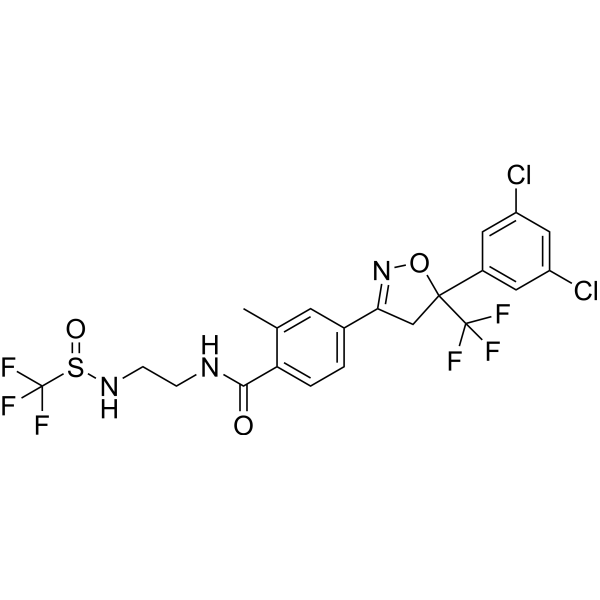 0 ImagesCat. No.: HY-156339GABA receptor Antagonist 1 (compound 7w) inhibits Px RDL1 GABAR with an IC50 value of 7.08 nmol/L. GABA receptor Antagonist 1 shows insecticide activity against P. xylostella, S. frugiperda, S. exigua, and S. litura, with LC50 of 0.09, 0.84, 0.87, and 0.68 mg/L respectively. GABA receptor Antagonist 1 shows a medium toxicity to honeybee (48 h, ID50 = 2.22 μg/adult), and low toxicity to zebrafish (LC50: 42.4 mg/L).
-
NO-711ME
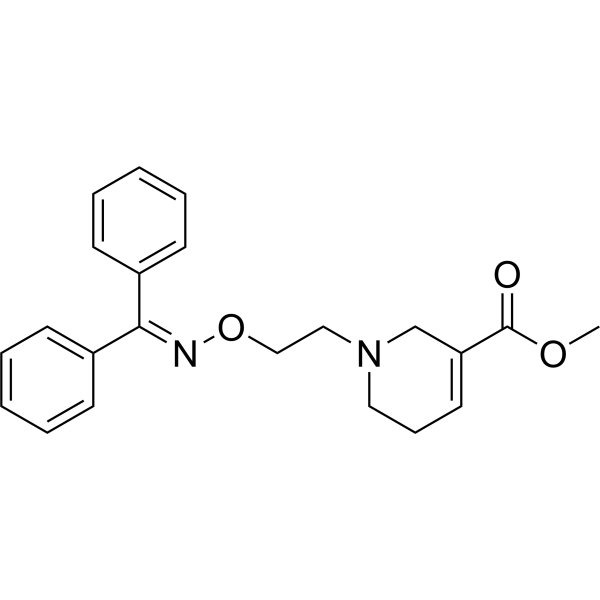 0 ImagesCat. No.: HY-129464CAS No.: 127586-66-7NO-711ME is a prodrug of NO-711. NO-711 is a potent and selective GABA uptake inhibitor.
-
COR627
 0 ImagesCat. No.: HY-119256CAS No.: 329221-34-3COR627 is a GABA receptor positive allosteric modulator with the ability to enhance GABA activity. COR627 exhibits effects on GABA and baclofen stimulation in rat cortical membranes and can increase its affinity for GABA(B) receptors. In vivo experiments have shown that COR627 can enhance the sedative/hypnotic effects of baclofen at pretreatment ineffective doses.
-
Fengabine
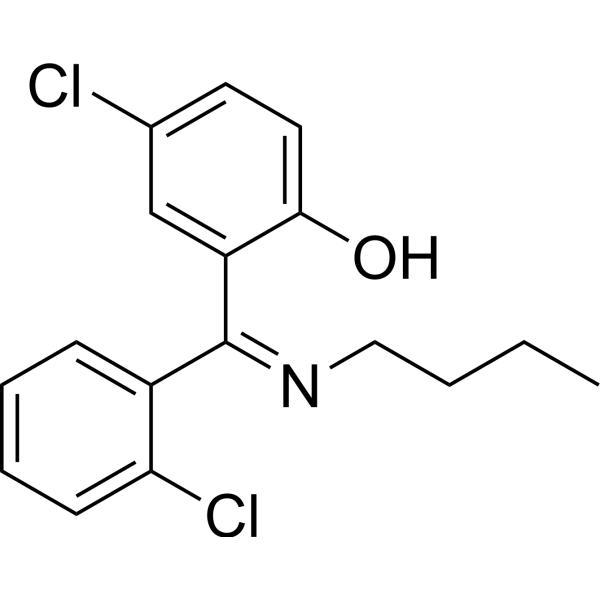 0 ImagesCat. No.: HY-123478CAS No.: 80018-06-0Synonyms: SL 79229Fengabine is a GABAergic antidepressant agent. Fengabine can be used for the research of depression.
-
SSR180575
 0 ImagesCat. No.: HY-W436366CAS No.: 220448-02-2SSR180575 is a specific and potent peripheral benzodiazepine receptor ligand. SSR180575 irreversibly and specifically binds with high affinity on rat heart mitochondria (Kd = 1.95 nM). SSR180575 can be used in the research of cardiovascular diseases.
-
Lirequinil
 0 ImagesCat. No.: HY-106917CAS No.: 143943-73-1Synonyms: Ro 41-3696Lirequinil (Ro 41-3696) is an orally active partial agonist of the benzodiazepine (BDZ) receptor. Lirequinil has the effect of promoting sleep.
-
GABAA receptor agent 6
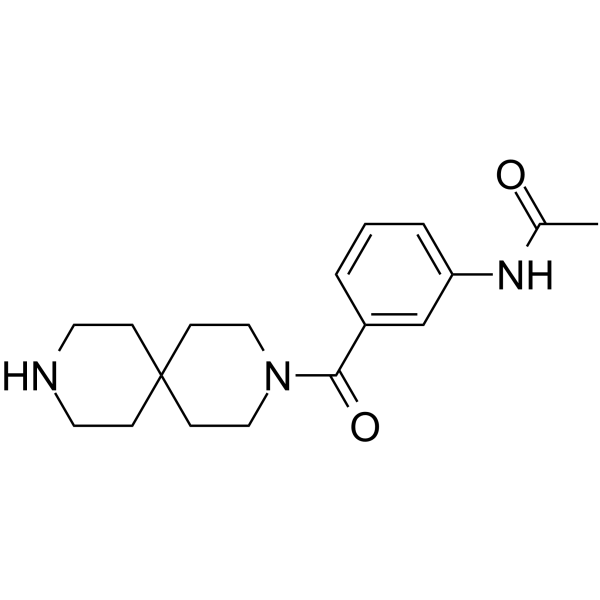 0 ImagesCat. No.: HY-145258CAS No.: 1808463-81-1GABAA receptor agent 6 (compound 2027) is a potent γ-GABAAR antagonist with an Ki of 0.56 µM. GABAA receptor agent 6 shows γ-GABAAR antagonist activity with low cellular membrane permeability.
-
γ-Aminobutyric acid-4,4-d2
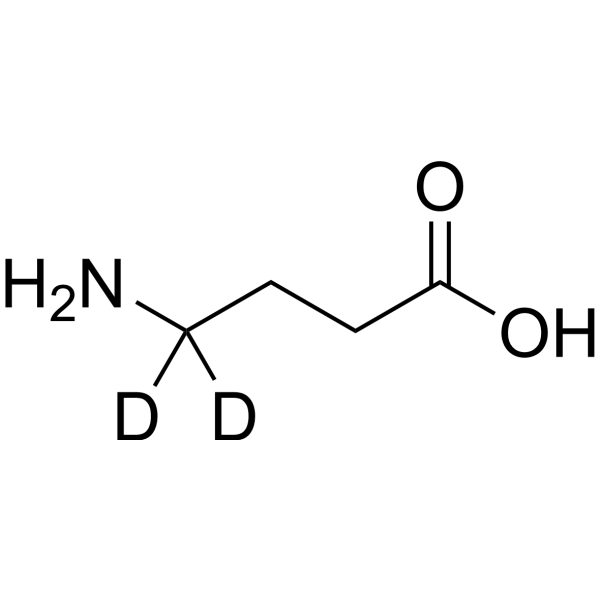 0 ImagesCat. No.: HY-N0067S2CAS No.: 107022-06-0Synonyms: 4-Aminobutyric acid-4,4-d2γ-Aminobutyric acid-4,4-d2 is the deuterium labeled γ-Aminobutyric acid. γ-Aminobutyric acid (4-Aminobutyric acid) is a major inhibitory neurotransmitter in the adult mammalian brain[1][2], binding to the ionotropic GABA receptors (GABAA receptors) and metabotropic receptors (GABAB receptors)[2].
-
Xilmenolone
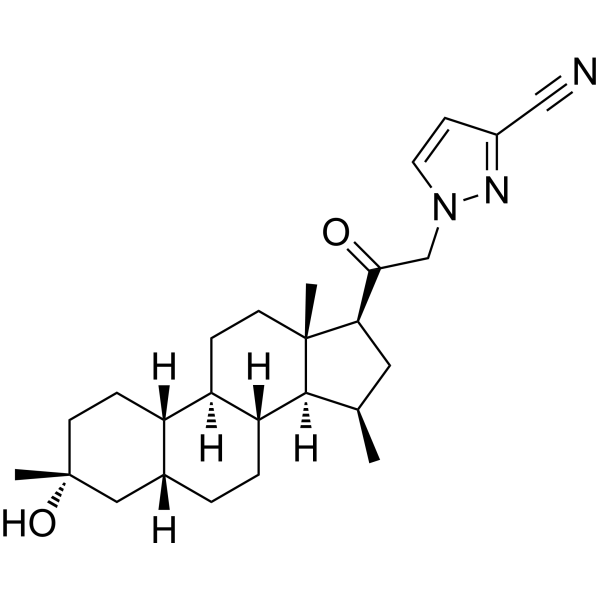 0 ImagesCat. No.: HY-147421CAS No.: 2368807-26-3Xilmenolone is a GABAA receptor positive allosteric modulator.
-
Sch 50910
 0 ImagesCat. No.: HY-115856CAS No.: 790633-59-9Sch 50910 is a GABA(B) receptor antagonist with some activity in inhibiting GABA(B) autoreceptors. Sch 50910 had no effect on electrically stimulated release at a concentration of 100 μM. The activity of Sch 50910 suggests that it may not have a significant role in studies of GABA(B) receptor function.
-
Jujuboside A (Standard)
 0 ImagesCat. No.: HY-N0659RCAS No.: 55466-04-1Jujuboside A (Standard) is the analytical standard of Jujuboside A. This product is intended for research and analytical applications. Jujuboside A is a glycoside extracted from Semen Ziziphi Spinosae, a Chinese herbal medicine used to treat insomnia and anxiety.

-
GABAA receptor agonist 1
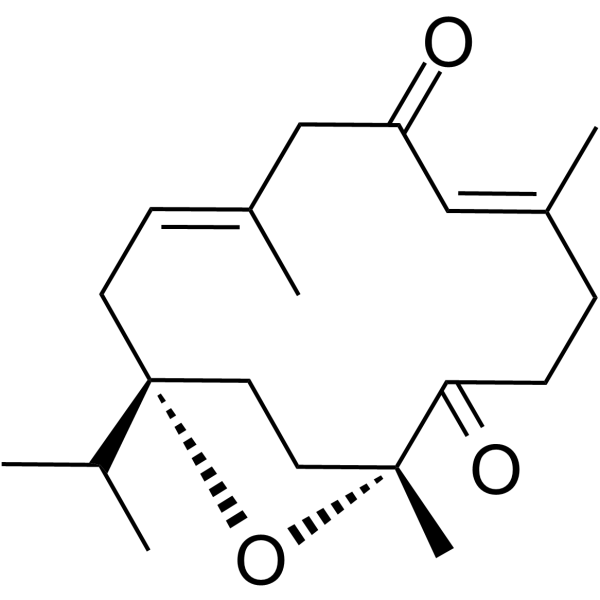 0 ImagesCat. No.: HY-147735GABAA receptor agonist 1 (compound 3e) is a potent GABAA receptor agonist. GABAA receptor agonist 1 shows anti-depression activities in classical mouse models of depression of FST and TST. GABAA receptor agonist 1 binds at the GABA binding site of GABAA receptor in order to produce GABAergic effects. GABAA receptor agonist 1 has the potential for the research of depression.
-
U-90042
 0 ImagesCat. No.: HY-103496CAS No.: 134516-99-7U-90042 is a gamma-aminobutyric acidA receptor agonist of α1, α3 and α6 subtypes with Ki values of 7.8 nM, 9.5 nM and 11.0 nM, respectively. U-90042 suppresses locomotor activity and impairs rotarod performance in mice. U-90042 produces sedation and ataxia and prolongs sleeping time in mice, rats and monkeys. U-90042 can be used as a sedative and hypnotic agent.
-
Loreclezole hydrochloride
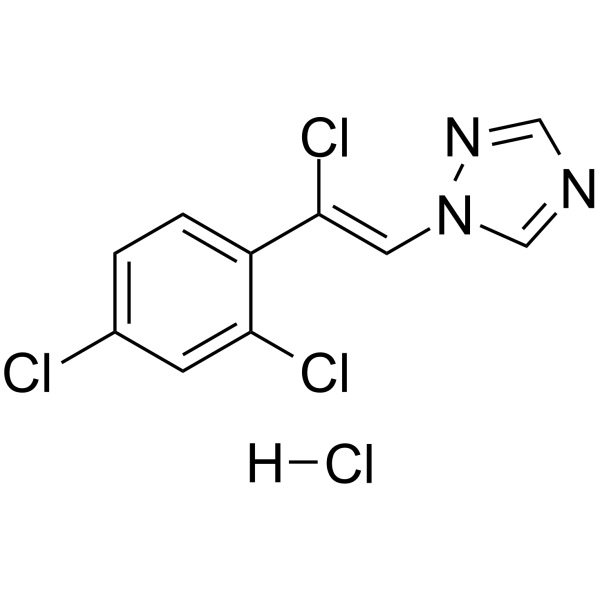 0 ImagesCat. No.: HY-105272ACAS No.: 2227372-56-5Synonyms: R 72063 hydrochlorideLoreclezole hydrochloride, an antiepileptic compound, is a selective GABAA receptor modulator and acts as a positive allosteric modulator of β2 or β3-subunit containing receptors.
-
Nerisopam
 0 ImagesCat. No.: HY-113726CAS No.: 102771-12-0Synonyms: GYKI52322; EGIS-6775Nerisopam is an orally active gamma-aminobutyric acid (GABA) receptor agonist. Nerisopam is an anxiolytic and antipsychotic homophthalazine. Nerisopam induces rapid, intense expression of Fos-like immunoreactivity in the rostral, dorsomedial and lateral parts of the striatum in the rat.
-
RO-488684
 0 ImagesCat. No.: HY-19266CAS No.: 179634-04-9RO-488684 is a benzodiazepine receptor agonist. RO-488684 can be used for research on sleep and conscious sedation.
-
COR628
 0 ImagesCat. No.: HY-123525CAS No.: 550310-04-8COR628 is a positive allosteric modulator of GABA(B) receptors with the activity of enhancing GABA-induced GTPγS stimulation. COR628 showed significant activity in in vitro studies but did not exhibit endogenous agonist activity. COR628 has shown efficacy in experiments in mice by enhancing the sedation/hypnosis induced by baclofen, shortening the onset time and extending the duration of loss of righting reflex when combined with non-sedating doses of baclofen . The cytotoxic effect of COR628 is comparable to or higher than that of GS39783 or BHF177 in concentration.
-
Isonipecotic acid-d9
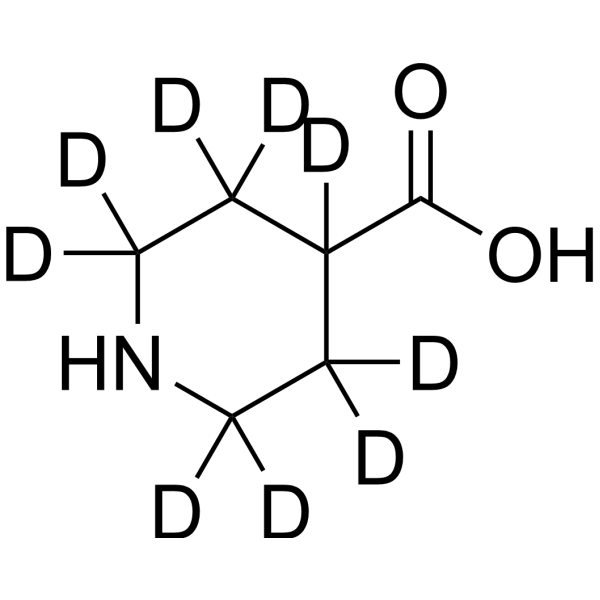 0 ImagesIsonipecotic acid-d9 is the deuterium labeled Isonipecotic acid. Isonipecotic acid is a GABAA receptor partial agonist.
-
K1 peptide
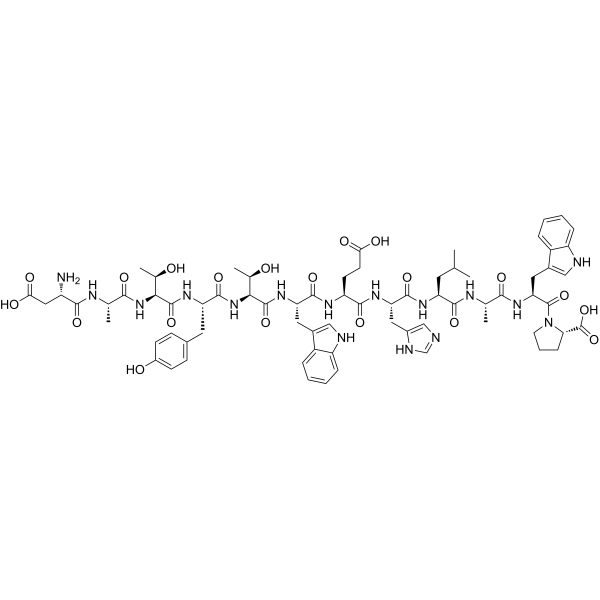 0 ImagesCat. No.: HY-P5964CAS No.: 2973365-72-7K1 peptide is a high-affinity peptide ligand for GABAA receptor-associated protein (GABARAP).




